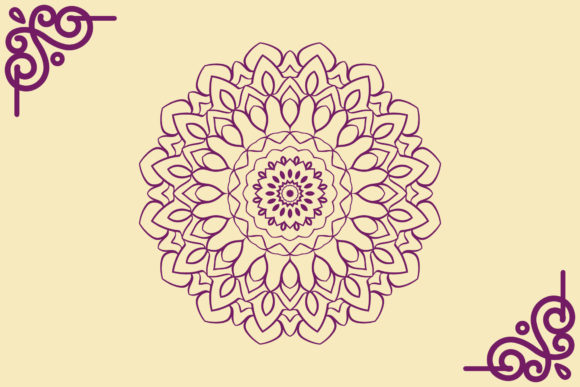
Decorative Flower Mandala Art Design for Creative Projects
There’s a specific kind of visual harmony that draws people in without demanding attention. Decorative Flower Mandala Art Design captures that feeling. It’s not just a pattern—it’s a composed, intricate system of floral geometry that balances complexity with calm. Each petal, curve, and radial layer is carefully arranged to create a sense of completeness and rhythm. This type of design carries a meditative quality, often associated with mindfulness and natural beauty, making it a versatile asset for creators looking to add depth and elegance to their work.
Visually, this mandala style is characterized by its symmetrical layout and botanical motifs. The designs often feature layered petals, leafy accents, and delicate linework that can range from bold and graphic to fine and detailed. The personality of Decorative Flower Mandala Art Design is both serene and structured—it feels organic yet precisely crafted. This duality allows it to fit into projects that need a touch of nature-inspired sophistication without appearing overly casual or chaotic. The appeal lies in its ability to evoke tranquility while maintaining strong visual impact.
Where This Design Truly Shines
Decorative Flower Mandala Art Design works exceptionally well across a variety of creative and commercial applications. In branding, it can serve as a central motif for logos, packaging, or brand patterns—especially for businesses in wellness, beauty, artisanal goods, or lifestyle sectors. The design’s inherent balance and detail make it suitable for both digital and print contexts, from website headers and social media graphics to business cards, stationery, and product labels.
For publishers and content creators, these mandalas offer a ready-made visual asset for book covers, editorial illustrations, blog post graphics, or digital backgrounds. Crafters and hobbyists can use them for DIY projects like wall art, decals, fabric prints, or handmade greeting cards. Because the design is provided in multiple formats—including vector files like AI, EPS, and SVG—it’s easy to scale, recolor, and adapt without losing quality. The consistent canvas size of 1920 x 1280 pixels across formats ensures a smooth workflow whether you’re designing for screen or print.
Practical Integration and Design Considerations
When incorporating Decorative Flower Mandala Art Design into a project, start by evaluating its visual weight and complexity. As a decorative element, it tends to command attention, so consider using it as a focal point or background texture rather than pairing it with other highly detailed graphics. For example, in a logo design, the mandala might work best as a standalone icon or as a subtle pattern behind clean typography. In packaging, it could wrap around a box or serve as a label accent, paired with simple sans serif fonts to maintain readability.
Font pairing is crucial when using this design alongside text. Because the mandala is ornate, it often benefits from pairing with typefaces that are clean and modern. A crisp sans serif font can provide excellent contrast, allowing the intricate details of the mandala to stand out without overwhelming the viewer. Alternatively, a simple serif font can add a touch of classic elegance. Avoid pairing it with overly decorative script fonts or handwritten fonts, as this can create visual competition and reduce clarity.
Think about color and context. The design’s floral nature lends itself to soft, natural color palettes—think muted greens, blush pinks, earthy tones, or even monochromatic schemes for a more contemporary look. However, it can also handle bolder colors if your project requires higher energy. Test the design in both full color and simplified versions to see what works best for your medium. In web design, for instance, a simplified or single-color version might load faster and integrate more smoothly with a site’s overall aesthetic.
Real-World Application Tips
For entrepreneurs and small business owners, Decorative Flower Mandala Art Design can be a cost-effective way to elevate brand identity without commissioning custom artwork. Use it consistently across touchpoints—like social media templates, website banners, and print materials—to build recognition. The key is consistency: choose one or two versions of the design and apply them systematically across your brand assets.
Always review the included file formats before starting a project. Vector formats like AI and EPS are ideal for print and large-scale applications because they can be resized freely. JPG and PNG files are suited for digital use, with PNGs offering transparency for layering. SVGs are particularly useful for web projects due to their scalability and small file size. DXF files can be handy for crafters using cutting machines. Since these designs are editable, you can adjust colors, remove elements, or combine parts to create custom variations that fit your specific needs.
Finally, consider the licensing terms. For commercial projects, ensure the usage rights align with your intended application—whether it’s for a product you sell, a client project, or a marketing campaign. Most premium design assets come with clear licensing, so review those details to avoid future issues. Decorative Flower Mandala Art Design is a versatile tool, but like any design asset, its effectiveness depends on thoughtful implementation. Use it to add visual interest, tell a story, or create a mood—but always with intention and clarity.