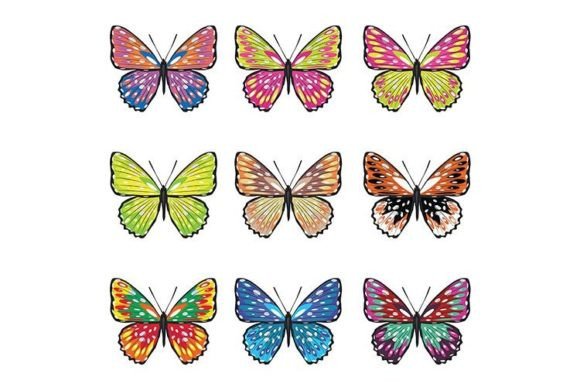
Decorative Vector Butterflies: A Summer Design Essential
When the creative brief calls for a touch of nature, whimsy, and vibrant energy, a static symbol often falls short. This is where the power of Decorative Vector Butterflies comes into play. More than just a simple graphic, this collection offers a versatile library of summer-inspired insect illustrations, meticulously crafted to bring life to any project. The appeal lies in the combination of organic movement and clean digital precision. Each wing is rendered with a sense of fluidity, capturing the delicate anatomy of a butterfly while maintaining the scalability required for modern design workflows. The personality of this collection is undeniably optimistic and airy, making it an ideal visual partner for themes ranging from ecological awareness to high-end fashion.
The visual characteristics of this set go beyond basic silhouettes. You are working with high-resolution JPG images that provide immediate, rich color depth, perfect for digital backgrounds or quick social media posts. However, the true value for a professional lies in the editable EPS vector file. This format allows you to manipulate anchor points, alter gradients, and reshape wings to fit specific layout constraints without pixelation. The "summer" descriptor is accurate; the color palette leans into the bright, saturated hues of the season—think vivid oranges, electric blues, and soft pastels against a stark white background. This high-contrast foundation ensures that these elements stand out, whether they are used as focal points or subtle accents.
Strategic Applications for Modern Creatives
Understanding where these assets fit into the broader ecosystem of design is key to maximizing their utility. For the graphic designer working on packaging design, these vectors can transform a generic box into an unboxing experience. Imagine a skincare line where the butterflies wrap around the corners of the label, creating a sense of natural purity. In editorial design, they serve as excellent break-out points in long-form text, guiding the reader’s eye through a magazine layout or a blog post. They are particularly effective in the wellness, beauty, and travel sectors, where visual storytelling relies heavily on evoking emotion and atmosphere.
For entrepreneurs and small business owners, the utility extends to brand identity. While you wouldn't typically use a decorative element like this for body text, it works beautifully as a secondary logo mark, a favicon, or a watermark. If you are building a personal brand as a coach or a creator, incorporating a delicate butterfly motif into your social media graphics can soften your visual presence and make your content more shareable. Web designers can utilize the high-res JPGs for hero sections or parallax scrolling effects, adding depth to a user interface without compromising page load speeds if optimized correctly. Even crafters and hobbyists find immense value here; the vectors can be imported into cutting machines for vinyl decals, printed on heat-transfer paper for apparel, or used to create custom stationery.
Influence on Visual Hierarchy and Brand Perception
The choice of graphic assets, much like the choice of a typeface, fundamentally alters how an audience perceives a message. Utilizing Decorative Vector Butterflies introduces a specific visual hierarchy. Because of their intricate detail and high contrast, they naturally draw the eye. This makes them powerful tools for visual hierarchy, allowing you to highlight key information—such as a sale price or a call to action—by placing it near or within the wings. However, this requires restraint. Overusing such a distinct graphic can clutter a layout, diminishing the professionalism of the piece. The goal is to use them as punctuation marks in your design sentence, not as the entire paragraph.
In terms of brand perception, these elements signal creativity and attention to detail. They suggest that a brand values aesthetics and is willing to invest in premium visual assets. This is crucial for recognition in crowded markets like cosmetics or boutique retail. When paired correctly with typography—perhaps a clean sans serif font for contrast or a flowing script font for elegance—the butterflies can help create a cohesive mood that enhances audience engagement. They humanize a digital experience, bridging the gap between the cold pixels of a screen and the organic world we inhabit.
Practical Workflow and Asset Management
Integrating these assets into your workflow requires a bit of technical foresight. First, always evaluate the project fit. If your brand voice is strictly corporate, industrial, or minimalist in a brutalist sense, floral and fauna motifs might feel out of place. However, for most lifestyle brands, the fit is natural. When working with the editable EPS vector file, ensure your software (like Adobe Illustrator or Affinity Designer) is set up to handle the layers. Often, these files are grouped by color or wing section, allowing you to easily recolor the butterflies to match your specific brand palette.
Consider the font pairings and surrounding design elements. If you are using the butterflies as a background texture, lower the opacity so they don't compete with your serif font headlines. If they are the hero element, ensure the surrounding negative space is sufficient to let them "breathe." Readability is paramount; never place busy text over the most detailed parts of the wing structure. Finally, review the commercial licensing details provided with the download. Most design assets like this come with a license that covers commercial use, but it is always the responsibility of the publisher or marketer to verify the terms regarding print runs or merchandise limits. Treating these files as part of your professional toolkit ensures they remain valuable assets rather than just decorative clutter.